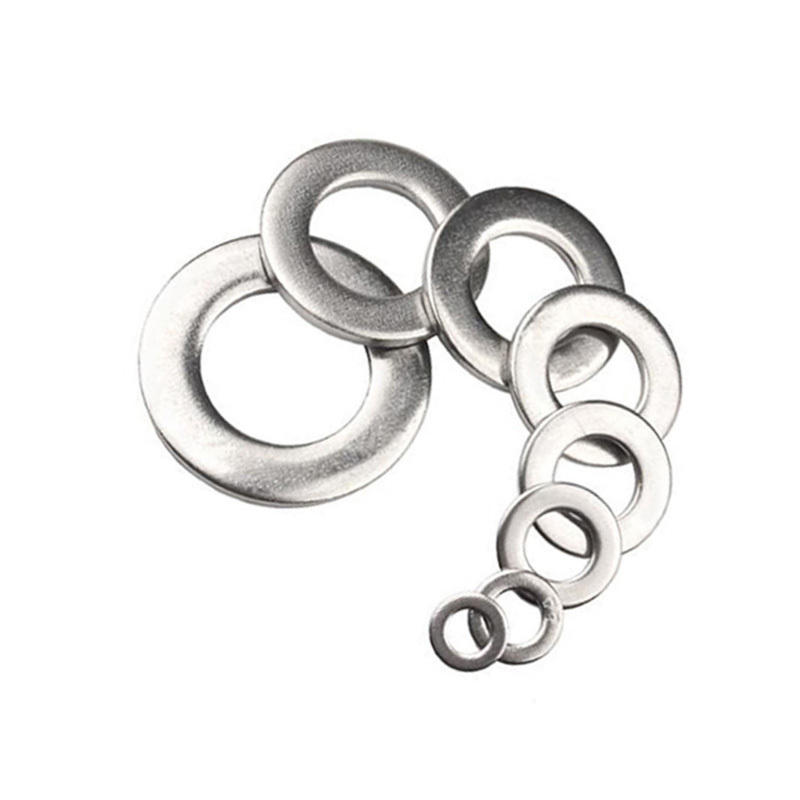
A Comprehensive Guide to Flat Washers (DIN 125) in the Industrial Equipment and Components Industry
Oct 31,2023
Introduction:
Flat washers are essential components in the industrial equipment and components industry, specifically in the field of fasteners and connectors. This guide will provide you with valuable insights into flat washers, focusing on the DIN 125 standard. Understand their significance, explore different types, and learn about their wide range of applications.
1. The Significance of Flat Wa
Introduction:
Flat washers are essential components in the industrial equipment and components industry, specifically in the field of fasteners and connectors. This guide will provide you with valuable insights into flat washers, focusing on the DIN 125 standard. Understand their significance, explore different types, and learn about their wide range of applications.
1. The Significance of Flat Washers:
Flat washers, also known as plain washers, play a crucial role in various applications. They provide a smooth bearing surface, distribute load, prevent damage to surfaces, and ensure proper tightening of fasteners. Their primary function is to create a stable and uniform distribution of forces, enhancing the overall strength and reliability of the assembly.
2. Understanding DIN 125:
DIN 125 refers to the German Industrial Standard for flat washers. It sets the specifications for their dimensions, materials, and tolerances. DIN 125 washers have a relatively large outer diameter compared to their inner diameter, ensuring optimal load distribution and enhanced stability. These washers are widely used in industrial equipment and components due to their standardized dimensions and superior performance.
3. Types of Flat Washers:
- Plain Flat Washers: These washers have a simple, flat design and are commonly used in general applications.
- Hardened Flat Washers: Made from hardened materials, these washers offer increased resistance to deformation and provide a reliable solution for high-stress environments.
- Stainless Steel Flat Washers: Ideal for applications requiring corrosion resistance, stainless steel flat washers are commonly used in the industrial equipment and components industry.
- Nylon Flat Washers: With excellent insulation properties, nylon flat washers are suitable for electrical applications and environments requiring vibration damping.
4. Applications of Flat Washers:
Flat washers find extensive use in the industrial equipment and components industry, including:
- Automotive: They are utilized in engine assemblies, chassis components, and suspension systems.
- Construction: Flat washers play a vital role in structural applications, such as securing steel beams and concrete structures.
- Machinery: They are integral components in machinery assemblies, ensuring proper alignment, reducing friction, and preventing damage.
- Electrical Equipment: Flat washers contribute to the safe installation of electrical components by providing insulation, vibration damping, and electrical grounding.
Conclusion:
Flat washers (DIN 125) are indispensable components in the industrial equipment and components industry. Their importance, standardized dimensions, and various types make them versatile and widely applicable. Understanding their significance, types, and applications will help professionals in the field make informed decisions while ensuring the reliability and longevity of their assemblies.
Flat washers are essential components in the industrial equipment and components industry, specifically in the field of fasteners and connectors. This guide will provide you with valuable insights into flat washers, focusing on the DIN 125 standard. Understand their significance, explore different types, and learn about their wide range of applications.
1. The Significance of Flat Washers:
Flat washers, also known as plain washers, play a crucial role in various applications. They provide a smooth bearing surface, distribute load, prevent damage to surfaces, and ensure proper tightening of fasteners. Their primary function is to create a stable and uniform distribution of forces, enhancing the overall strength and reliability of the assembly.
2. Understanding DIN 125:
DIN 125 refers to the German Industrial Standard for flat washers. It sets the specifications for their dimensions, materials, and tolerances. DIN 125 washers have a relatively large outer diameter compared to their inner diameter, ensuring optimal load distribution and enhanced stability. These washers are widely used in industrial equipment and components due to their standardized dimensions and superior performance.
3. Types of Flat Washers:
- Plain Flat Washers: These washers have a simple, flat design and are commonly used in general applications.
- Hardened Flat Washers: Made from hardened materials, these washers offer increased resistance to deformation and provide a reliable solution for high-stress environments.
- Stainless Steel Flat Washers: Ideal for applications requiring corrosion resistance, stainless steel flat washers are commonly used in the industrial equipment and components industry.
- Nylon Flat Washers: With excellent insulation properties, nylon flat washers are suitable for electrical applications and environments requiring vibration damping.
4. Applications of Flat Washers:
Flat washers find extensive use in the industrial equipment and components industry, including:
- Automotive: They are utilized in engine assemblies, chassis components, and suspension systems.
- Construction: Flat washers play a vital role in structural applications, such as securing steel beams and concrete structures.
- Machinery: They are integral components in machinery assemblies, ensuring proper alignment, reducing friction, and preventing damage.
- Electrical Equipment: Flat washers contribute to the safe installation of electrical components by providing insulation, vibration damping, and electrical grounding.
Conclusion:
Flat washers (DIN 125) are indispensable components in the industrial equipment and components industry. Their importance, standardized dimensions, and various types make them versatile and widely applicable. Understanding their significance, types, and applications will help professionals in the field make informed decisions while ensuring the reliability and longevity of their assemblies.
flat washer din125
RELEVANT INFORMATION
Understanding the Importance and Applications of Spring Washer DIN127 in Industrial Fastening
In the industrial equipment and components sector, the Spring Washer DIN127 stands out as a crucial fastening element. Its distinctive design serves to maintain tension and prevent loosening of screws and bolts under various conditions. This article explores the characteristics and applications of the Spring Washer DIN127, providing valuable insights for professionals in the field.
The Spring Wash
Nov 15,2025
Why You Need Flat Washer DIN125 for Your Industrial Applications
Introduction: Understanding Flat Washers in Industrial Applications
In the realm of industrial equipment and components, the importance of effective fastening cannot be overstated. Among the myriad of fastening solutions available, **Flat Washer DIN125** stands out as a crucial component that enhances the reliability and performanc
Nov 12,2025
Understanding Stud Bolt DIN 938: A Comprehensive Guide for Industrial Applications
---
Stud Bolts are essential components in various industrial applications, and the DIN 938 specification outlines specific standards for these fasteners. A Stud Bolt is essentially a long bolt with no head, featuring threads on both ends. It is used in conjunction with nuts to create a secure joint between two or more parts. The DIN 938 standard specifies dimensions, mechanical properties, and to
Nov 09,2025